
As January 2026 unfolds, online searches and social media are flooded with questions about $2,000 direct deposits. Many posts claim these are new federal stimulus checks, IRS relief payments, tariff dividends, or automatic payouts hitting bank accounts. Viral stories promise quick eligibility checks, set timelines, and simple rules for beneficiaries. Yet, official IRS releases, Treasury updates, and fact-checks from outlets like FOX, CNBC, USA TODAY, and PolitiFact confirm a clear reality: no new $2,000 federal payment is authorized, scheduled, or being issued in January 2026.
Rumors often stem from former President Trump’s mentions of a potential $2,000 “tariff dividend” from tariff revenues, aimed at middle- and lower-income households and excluding high earners. However, this proposal remains unlegislated, unfunded, and without a rollout plan. What many may actually see around $2,000 are enhanced tax refunds from One Big Beautiful Bill (OBBB) provisions or COLA-adjusted benefits—not a flat $2,000 direct deposit.
Current Status: No Confirmed $2,000 Direct Deposit Program

Key points from official sources:
- No federal stimulus or relief payments of $2,000 are approved for January 2026.
- The tariff dividend proposal has no enacted legislation, finalized eligibility criteria, or IRS/Treasury implementation. Recent comments suggest possible timing “toward the end of the year” or mid-to-late 2026. Economists note projected tariff revenue ($150–$240 billion) falls short of estimated costs ($450–$680+ billion) for broad $2,000 payouts, making congressional approval essential.
- Any claims requiring immediate action, third-party links, or upfront fees are scams. Federal agencies never request personal information for payment eligibility outside official portals.
- IRS news in January focuses on the tax filing season (opened January 26), OBBB preparations, and routine operations—no $2,000 relief payments exist.
- Treasury deposits near $2,000 are generally standard tax refunds, benefit adjustments, or routine payments—not new stimulus.
Payments Often Mistaken for $2,000 Direct Deposits
While no new program exists, some legitimate federal payments may approximate $2,000:
OBBB-Enhanced Tax Refunds
- Retroactive 2025 provisions—no tax on tips or overtime, senior deductions, auto loan interest relief, and expanded credits—can boost refunds.
- Many taxpayers may see $1,000–$3,000+ in additional refunds. Early e-filed direct deposit refunds may start late January or February.

COLA-Boosted Monthly Benefits
- Social Security retirement benefits increased by 2.8%, averaging ~$2,071/month.
- SSI maximums: $994 individual/$1,491 couple; SSDI averages ~$1,630/month.
- VA and other federal benefits reflect similar COLA adjustments. These are recurring monthly amounts, not one-time $2,000 payments.
Routine Payments
- Social Security, SSI, and VA follow established schedules, often staggered by birth date or monthly cycles. Post-COLA amounts may appear larger but are not new deposits.
No single $2,000 eligibility or automatic deposit applies across beneficiaries.
Proposed Tariff Dividend: Eligibility, Timeline, and Rules
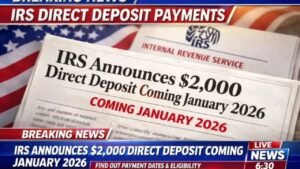
If the tariff dividend is ever enacted (currently unconfirmed):
- Eligibility: Likely middle- and lower-income households, possibly determined by tax returns or income thresholds; high earners excluded. No official rules exist yet.
- Timeline: References suggest mid-to-late 2026 or year-end; no January 2026 payouts are planned. Congressional approval, funding, and IRS setup would be required.
- Beneficiary Rules: Automatic for eligible recipients based on records; no action is required through unofficial sites. Any claim demanding fees or personal information is a scam.
Beneficiary Guidance and Practical Steps
To navigate federal payments safely and maximize benefits:
- Use Official Sources: IRS.gov, Treasury.gov, SSA.gov, VA.gov—ignore unsolicited messages, emails, or third-party “claim” portals.
- Track Payments: Check tax refunds via Where’s My Refund? and Social Security benefits via mySocialSecurity.
- File Taxes Early: The 2026 filing season opened January 26; e-filing with direct deposit ensures the fastest access to OBBB-enhanced refunds.
- Avoid Scams: Never pay fees, provide personal information, or click urgent “stimulus” links. Report suspicious activity to IRS phishing (phishing@irs.gov) or FTC.gov.
- Monitor Updates: Follow congressional and Treasury news—any legitimate program will be publicly confirmed.
- Prepare for Boosts: Claim OBBB deductions accurately and verify COLA impacts on monthly benefits.
Conclusion
$2,000 direct deposits are not arriving as a new federal program in January 2026. No IRS stimulus, tariff dividend rollout, or relief payment is confirmed. Rumors combine unpassed proposals, routine benefit increases, and scams. Beneficiaries should focus on legitimate opportunities: early tax filing for OBBB-enhanced refunds, automatic COLA increases on Social Security, SSI, and VA benefits, and monitoring official portals for updates. Real federal support is distributed through verified channels—no mysterious $2,000 deposit is required.
Staying informed, filing taxes promptly, and using official government tools ensures access to all entitled funds while avoiding misinformation and scams.